 Gusto
Gusto Paychex
Gusto directly positions itself against Paychex on official comparison pages and on its manufacturing landing page, where a customer quote explicitly contrasts Gusto with Paychex for payroll usability and control.
 LangChain
 TensorFlow
LangChain complements TensorFlow by orchestrating TensorFlow-based models into production pipelines. It handles prompt management, tool calling, and retrieval around TensorFlow-served models without replacing the training framework.
LangChain PyTorch
LangChain complements PyTorch by providing the orchestration layer above PyTorch-based models. Teams train or fine-tune models in PyTorch, then serve them through LangChain chains for RAG, agents, and conversational interfaces.
LangChain Redis
RedisLangChain integrates with Redis as a vector store, cache, and persistent memory backend. RedisJSON and RediSearch modules enable semantic search and conversational memory for LLM applications.
 Datadog
 Prometheus
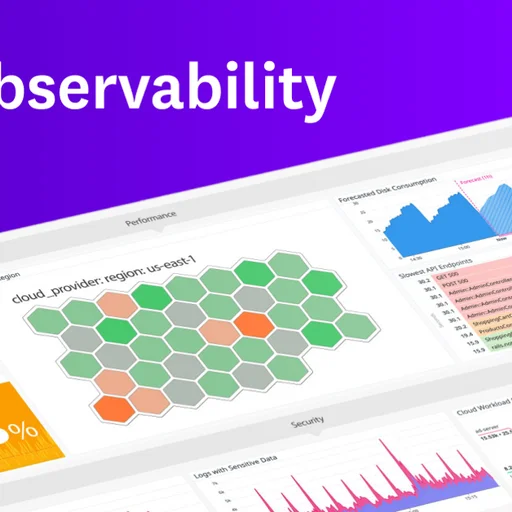
Datadog and Prometheus both handle metrics and alerting, but Datadog is a managed SaaS with a broad observability suite, while Prometheus is an open-source monitoring system built around its own time-series database for cloud-native metrics.
Datadog Grafana
Datadog and Grafana Cloud both provide observability dashboards; Datadog is a fully managed SaaS with integrated APM and security, while Grafana is open-source and self-hosted (or via Grafana Cloud) with a plugin-based ecosystem.
 NVIDIA Isaac Sim
 MuJoCo
Isaac Sim can import MJCF assets from MuJoCo workflows and convert them to USD, making MuJoCo models reusable inside Isaac Sim. This is a one-way asset import path, so MuJoCo-authored robots and environments can be brought into Isaac Sim simulations even though the two simulators use different joint representations.
 CVAT
CVAT FiftyOne
CVAT supports a FiftyOne integration that lets teams programmatically create CVAT tasks and jobs, upload data, define label schemas, and download annotations from FiftyOne. CVAT documentation describes the integration surface for driving annotation operations from FiftyOne Python APIs.
 ContextForge
 agentgateway
ContextForge and agentgateway both target MCP traffic but differ in scope. ContextForge is IBM's Python-based AI gateway with an admin UI, Cedar ABAC, plugin ecosystem, and federation across MCP, A2A, REST, and gRPC. agentgateway is a Rust-based Linux Foundation project focused on high-throughput policy enforcement via Envoy-style filters, configured declaratively through the Kubernetes Gateway API.
 Higress
 Bifrost
Higress and Bifrost both combine LLM gateway and MCP functionality in an Apache 2.0 binary. Higress is Envoy-based from Alibaba with built-in MCP hosting and OpenAPI-to-MCP conversion; Bifrost is Go-based from Maxim AI with dual-role MCP client plus server and a lighter operational footprint.
 Traefik
Traefik's ForwardAuth middleware delegates authentication to an external OIDC proxy that validates tokens against Zitadel's discovery and JWKS endpoints. This pattern adds OIDC SSO to any service fronted by Traefik without Traefik Enterprise.
 Open WebUI
 LibreChat
Open WebUI and LibreChat are both open-source self-hostable chat UIs with multi-provider support, authentication, and MCP client integration. Open WebUI is BSD-3 with a Pipelines and Functions framework and Postgres backend; LibreChat is MIT with conversation forking, presets, and a MongoDB backend.
LibreChat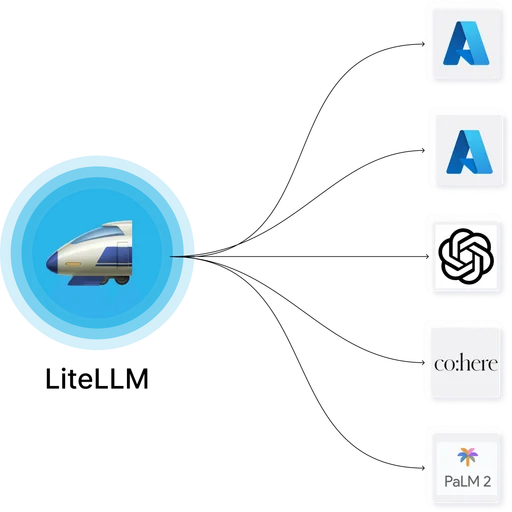 LiteLLM
LibreChat points at LiteLLM as an upstream OpenAI-compatible endpoint to get access to every model LiteLLM aggregates along with virtual-key budget enforcement. LibreChat handles the user-facing chat experience; LiteLLM handles provider abstraction and cost tracking.
Open WebUILiteLLMOpen WebUI connects to LiteLLM as an upstream OpenAI-compatible provider, giving the chat UI access to every model and provider LiteLLM aggregates, plus centralized virtual-key budget enforcement. Open WebUI's native OIDC handles user login; LiteLLM handles LLM routing and cost tracking downstream.
 Helicone
 Langfuse
Helicone and Langfuse are both open-source LLM observability platforms with self-hostable stacks backed by ClickHouse and Postgres. Helicone is a proxy-first model capturing traces by routing through its gateway; Langfuse is an SDK-first model capturing traces via client library instrumentation or integration callbacks.
LiteLLMLangfuseLiteLLM sends traces directly to Langfuse via a built-in callback, giving teams rich trace analysis, prompt management, and evaluation on top of the gateway layer without application-level instrumentation.
 MCPJungle
MetaMCP and MCPJungle are both lightweight MCP aggregators. MetaMCP has a three-level Servers-Namespaces-Endpoints hierarchy with OIDC discovery; MCPJungle is simpler with API-key-only auth and YAML configuration.
ContextForgeContextForge and MetaMCP are both MCP federation gateways. ContextForge is IBM's Apache 2.0 platform with Cedar-based RBAC, 40+ plugins, and a heavier operational footprint; MetaMCP is MIT with a simpler Servers-Namespaces-Endpoints model and lighter deployment.
LiteLLMBifrostLiteLLM and Bifrost both cover LLM gateway plus MCP territory. LiteLLM is Python-first with mature tooling and an open-core commercial tier; Bifrost is Go-first Apache 2.0 from Maxim AI with a lighter operational footprint and SAML as a commercial feature.
LiteLLMHigressLiteLLM and Higress both combine LLM gateway and MCP functionality under one binary. LiteLLM is Python-based with an open-core commercial tier; Higress is Envoy-based Apache 2.0 from Alibaba with a Chinese-primary documentation set.
 New API
 One API
New API is a QuantumNous fork of songquanpeng's one-api, re-licensed to AGPL-3.0 and extended with OIDC SSO, expanded provider support, and active development. The upstream one-api is in slow maintenance.
LiteLLMContextForgeLiteLLM and ContextForge commonly pair in deployments that need both a governed LLM gateway (LiteLLM) and a dedicated MCP federation tier (ContextForge) with RBAC, plugin policy, and audit retention.
LiteLLM Portkey Gateway
Two of the most widely used general-purpose OSS LLM gateways, differing in runtime (Python vs Node/Go), provider catalog, and scope of features in the commercial tier.
FiftyOneTensorFlowFiftyOne integrates with TensorFlow-based workflows by supporting dataset inspection, prediction review, and model evaluation around TensorFlow models in Python. FiftyOne documentation and README describe TensorFlow as part of the framework ecosystem it works with.
FiftyOnePyTorchFiftyOne integrates with PyTorch-based workflows by letting teams load datasets, inspect predictions, review failure cases, and analyze embeddings around PyTorch models from Python. FiftyOne documentation and README explicitly position PyTorch as part of its supported deep learning ecosystem.
 Label Studio
 Datumaro
Label Studio is used to create and manage annotations, while Datumaro is used to transform, validate, and convert datasets between training formats. This makes Datumaro a practical downstream companion when labeled data from Label Studio needs format conversion or dataset processing.
Label StudioFiftyOneLabel Studio handles human annotation and review, while FiftyOne is used to inspect, visualize, and curate datasets and model outputs. Together they support a workflow where teams label data in Label Studio and analyze dataset quality or model behavior in FiftyOne.
Label StudioCVATLabel Studio and CVAT are both open-source annotation platforms used to create labeled datasets, but they differ in scope. Label Studio covers text, audio, documents, time series, LLM evaluation, and computer vision, while CVAT is more specialized around image, video, and 3D computer vision labeling workflows.
Datumaro OpenVINO
Datumaro handles dataset preparation steps such as format conversion, filtering, validation, merging, and splitting before training or inference workflows in the OpenVINO ecosystem. OpenVINO documentation describes Datumaro as integrated into OpenVINO Training Extensions and CVAT for data preparation, making it a practical upstream companion for vision model pipelines built around OpenVINO.
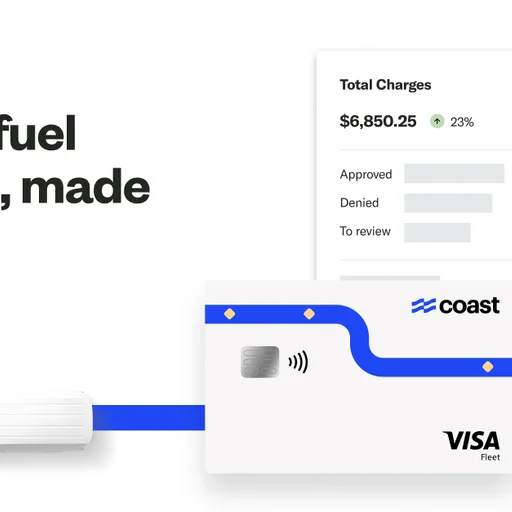 Coast
Coast Geotab
Coast lists Geotab as an integration for telematics-aware spend controls and fleet transaction workflows.
Coast Samsara
Coast lists Samsara as a telematics integration used to connect vehicle and GPS context with card controls and fleet expense workflows.
Coast Linxup
Coast has a vendor-documented integration with Linxup that uses telematics data to block suspicious fuel transactions, match odometer data to purchases, and import vehicle records into Coast.
 Gorgias
 Intercom
Both tools are realistic shortlist options for teams that want conversational support, chat, automation, and AI-assisted customer interactions. Gorgias is more tightly coupled to ecommerce workflows such as Shopify order context and support operations, while Intercom is broader across SaaS and product-led customer messaging.
 ArmisDatadog
Armis integrates with Datadog for monitoring inventory and vulnerabilities within observability dashboards
Armis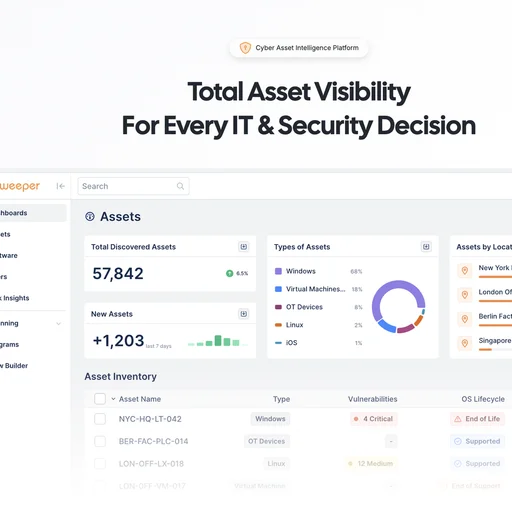 Lansweeper
Armis and Lansweeper both provide cyber asset intelligence and discovery capabilities, though Armis focuses more on security and threat detection while Lansweeper emphasizes IT asset management and inventory
 Watershed
 Sphera
Watershed and Sphera compete in enterprise carbon accounting with different heritage and capabilities
 Your brand here — Reach plant managers, engineers, and technology leaders evaluating manufacturing tools.