 vs
vs
Datadog vs Prometheus
Datadog and Prometheus address metrics monitoring from opposite ends of the managed-versus-open-source spectrum.
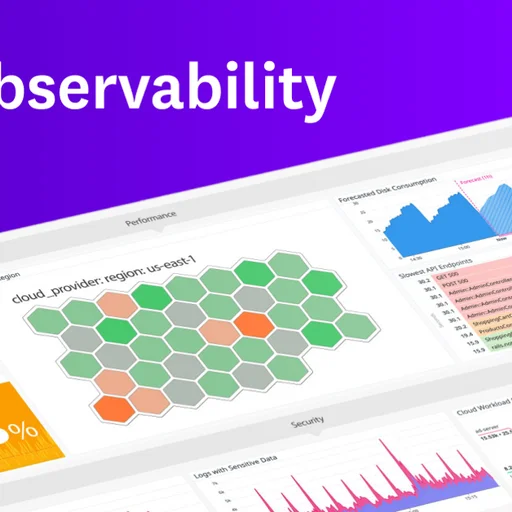
Datadog delivers a fully managed observability platform where metrics, traces, logs, and security data are collected by lightweight agents and sent to Datadog's cloud. It offers pre-built dashboards, anomaly detection, and synthetic monitoring without requiring users to operate storage or query layers. This convenience comes with usage-based pricing that can become expensive at scale.
Prometheus is a graduated CNCF project that scrapes metrics from instrumented applications and exporters, storing them locally in a time-series database. It is the de-facto standard for Kubernetes metrics and pairs with Grafana for visualization and Alertmanager for notifications. Prometheus is free to run, but users must manage retention, high availability, and long-term storage themselves.
Feature comparison
| Capability | Datadog | Prometheus |
|---|---|---|
| Model | Push via agent | Pull via HTTP scrape |
| Storage | Managed SaaS | Local TSDB |
| Query language | Datadog query syntax | PromQL |
| Ecosystem | All-in-one | Metrics only; needs Grafana, Loki, Tempo |
| Cost | Subscription per host + data | Free; infrastructure costs only |
When to choose Datadog
- You want a single pane of glass for metrics, logs, traces, and security.
- Your team does not have the capacity to operate TSDB clusters.
- You need out-of-the-box integrations for hundreds of SaaS and cloud services.
When to choose Prometheus
- You are running Kubernetes and need cloud-native metrics without vendor lock-in.
- You want full control over data retention and query performance.
- Budget constraints favor open-source tooling with self-managed infrastructure.
Can they coexist?
Yes. Some teams run Prometheus on factory floors or in edge clusters for local metrics collection, then forward aggregated data to Datadog for centralized dashboards and alerting. Datadog also offers a Prometheus-compatible metrics endpoint for hybrid setups.
 Your brand here — Reach plant managers, engineers, and technology leaders evaluating manufacturing tools.