Slack
Business communication platform for channel-based messaging, huddles, workflow automation, and app integrations. Slack is used across internal teams and external partner workflows, with enterprise controls for search, identity, and compliance.
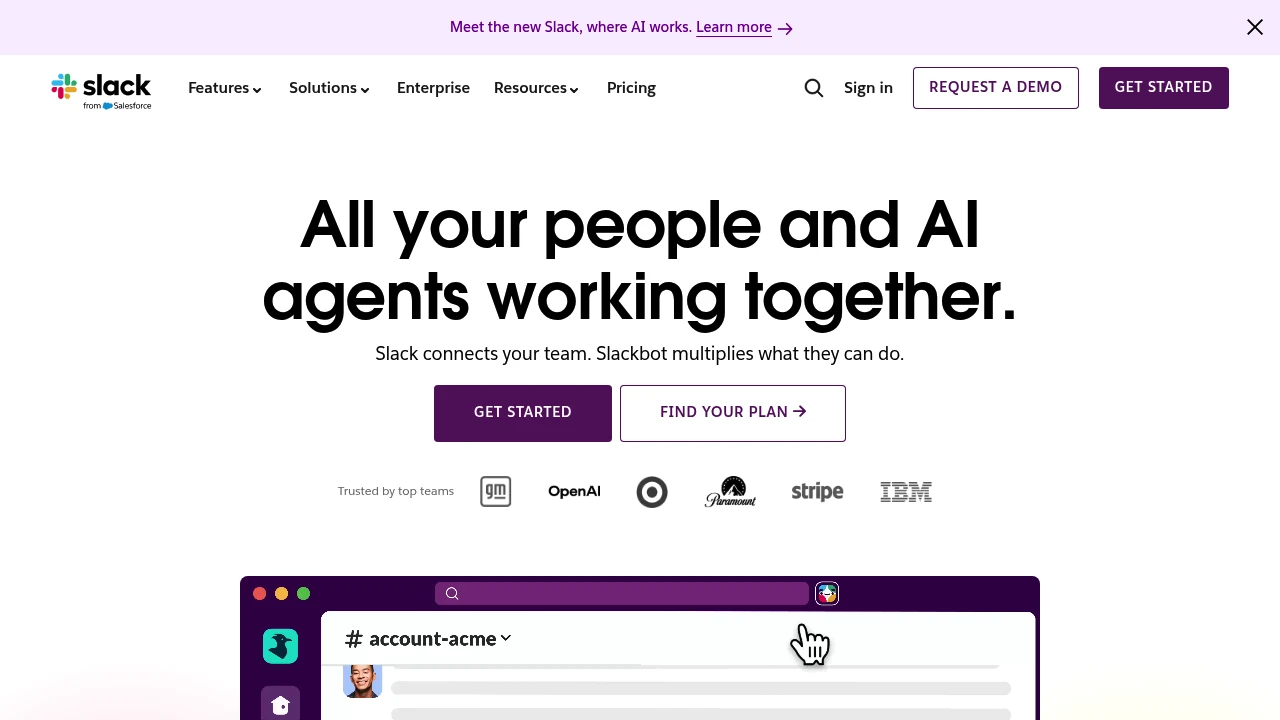
Slack is a general-purpose work communication platform built around channels, direct messages, huddles, workflows, and a large app ecosystem. In manufacturing, business, and technology teams, it is often used to coordinate projects, share documents, escalate incidents, and keep customer, supplier, and operations conversations in one searchable workspace.
What it does
Slack combines persistent team messaging with lightweight meetings, shared canvases, task lists, workflow automation, and external collaboration through Slack Connect. The platform also exposes developer tools and APIs for custom apps, workflow steps, and integrations with systems such as Salesforce, Jira, Google Drive, and SharePoint.
How teams use it
Teams commonly use Slack as the communication layer across engineering, operations, commercial, and support work. Channels organize work by project, site, customer, or function; huddles handle quick calls and screen sharing; and workflow tools automate approvals, reminders, intake forms, and recurring updates without requiring a separate portal for every task.
Integration surface
Slack provides a large marketplace of prebuilt integrations plus developer tooling for custom extensions. Its app ecosystem covers CRM, document management, scheduling, incident response, AI assistants, and developer workflows, which makes Slack useful as a conversational front end for other systems rather than a standalone system of record.
Limitations
- Slack is primarily a communication layer, so structured business records still need to live in systems such as CRM, ERP, document management, or ticketing tools.
- Advanced governance, enterprise search across connected systems, and some AI capabilities are reserved for higher-tier plans, which can limit smaller teams.
- High-volume workspaces can become noisy without strong channel design, retention policies, and notification discipline.
- Slack does not replace specialist execution tools for manufacturing operations, quality workflows, or formal project planning.
Slack Microsoft SharePoint
Slack integrates with Microsoft SharePoint through the marketplace OneDrive and SharePoint app so teams can share files and document links inside conversations. This makes SharePoint content accessible in Slack without treating Slack as the document system of record.
Slack Salesforce
Slack integrates with Salesforce so account, case, lead, and opportunity context can appear inside team channels and workflows. Slack's pricing and product pages position Salesforce data and follow-up work as a native CRM workflow inside Slack.
Similar to Slack